
ISSN : 2582-4163
Friday , 25 September 2026
KTM College



Abstract
This article provides an analytical reading of Chapter 8 ("The Celebration of the Prophet's Birthday") in Annemarie Schimmel’s seminal work, And Muhammad Is His Messenger: The Veneration of the Prophet in Islamic Piety (1985). Schimmel’s study marks a pivotal shift in Western scholarship on Islam, redirecting attention from dry legalistic dogma to the affective, lived devotional piety (hubb an-nabi) of ordinary Muslims. Through an interdisciplinary framework combining the phenomenology of religion, historical analysis, and literary criticism, Schimmel explores how the Mawlid evolved from early Fatimid court rituals and grand medieval public festivals in Arbela into a multi-faceted global phenomenon. This analysis examines Schimmel’s textual evidence regarding legal polemics (bid'a vs. bid'a hasana), regional cultural inculturation across Ottoman Turkey and South Asia, the cosmic poetics of light (Nur Muhammad), and 20th-century modernist attempts to demythologize the festival.
Introduction: Schimmel’s Methodological Paradigm Shift
In Western Islamic studies during the 19th and early 20th centuries, academic discourse was dominated by normative approaches that prioritized legal manuals, dogmatic theology, and political history. As Annemarie Schimmel observes in her introduction to And Muhammad Is His Messenger, this orientation frequently led Western observers to misapprehend or entirely overlook the central, emotional role of the Prophet Muhammad in the everyday lives of believers. To bridge this interpretive gap, Schimmel employs a phenomenological and literary methodology, drawing upon primary Arabic, Persian, Turkish, Urdu, Sindhi, and Bengali texts collected over four decades of research.
Central to Schimmel’s analytical framework in Chapter 8 ("The Celebration of the Prophet's Birthday") is the thesis that Islamic piety cannot be understood solely through legal rulings (fiqh). Rather, it must be comprehended through the lived experience of uswa hasana (the "beautiful model," Qur'an 33:21) and the expression of personal and collective love (hubb) for the Prophet. The Mawlid (or Milad, Mevlût) serves as Schimmel’s primary case study for demonstrating how devotional affection permeates community life, bridging the elite religious establishment and popular folk culture.
Historical Genesis: From Fatimid Court Ceremonial to Public Jubilation
Schimmel traces the historical institutionalization of the Mawlid through a careful chronological analysis of medieval historical sources. She notes that early expressions of devotion were localized, such as the late 8th-century conversion of the Prophet’s birthplace in Mecca into a public oratory by al-Khayzuran, the mother of the Abbasid Caliph Harun al-Rashid.
However, the formal state observance of the Prophet’s birthday emerged under the Shia Fatimid Dynasty (969–1171 CE) in Cairo. Drawing upon the records of the 15th-century Egyptian historian al-Maqrizi, Schimmel highlights that the Fatimid Mawlid of 1122 CE was a solemn, court-centered event. It was attended primarily by state dignitaries and scholars who listened to Quranic recitations and sermons, after which state officials distributed alms and sweets—particularly honey, known from Hadith literature as the Prophet’s favorite delicacy.
Schimmel argues that the decisive transformation of the Mawlid into an exuberant, popular public festival occurred in 1207 CE in Arbela (Northern Iraq) under the Sunni ruler Muzaffar al-Din Gökböri. Based on the eyewitness accounts of Ibn Khallikan and the traditionist Ibn Dihya, Schimmel details how Gökböri transformed the observance into a month-long civic celebration:
• Infrastructure: Massive multi-story wooden pavilions were constructed for foreign guests and Sufi orders.
• Performative Rituals: Festivities featured grand torchlight processions, Sufi music (sama'), shadow plays, and large-scale public banquets requiring the slaughter of thousands of animals.
Schimmel emphasizes that the Arbela model established a precedent that was subsequently adopted across the Islamic world, including Mamluk Cairo—where sultans pitched lavish decorated tents at the Citadel—and Merinid Morocco, where the Mawlid was officially introduced in 1291 CE to blend religious devotion with Sharifian political legitimacy.
Juridical Debates: The Polemics of Bid'a versus Bid'a Hasana
A critical dimension of Schimmel’s reading is her objective presentation of the intense legal debates generated by Mawlid festivities among Islamic jurists (fuqaha). Schimmel categorizes these debates into two distinct legal positions:
A. The Legal Opponents
• Ibn Taymiyya (d. 1328 CE): The Hanbali reformer launched a vigorous attack on the Mawlid, arguing that celebrating an unsanctioned annual date represented an un-Islamic innovation (bid'a) that mimicked the Christian celebration of Christmas.
• Ibn al-Hajj (d. 1336 CE): Writing in his Maliki treatise Al-Madkhal, he raised moral and liturgical objections, criticizing mixed-gender gatherings, musical ecstasy, and the paradox of engaging in festive joy on 12 Rabi' al-Awwal—a date traditionally remembered as both the birth and the death anniversary (barah wafat) of the Prophet.
B. The Legal Defenders
• Ibn Hajar al-Asqalani (d. 1449 CE): The Hadith authority provided a celebrated legal justification by citing a canonical Hadith from Sahih al-Bukhari regarding the fast of Ashura. Ibn Hajar argued that if fasting to thank God for saving Moses was valid, then expressing gratitude for the birth of Muhammad—the ultimate divine mercy—was equally legitimate.
• Jalal al-Din al-Suyuti (d. 1505 CE): In his treatise Husn al-Maqsid fi 'Amal al-Mawlid ("The Good Intention in Celebrating the Mawlid"), al-Suyuti formally classified the festival as a bid'a hasana (praiseworthy innovation), provided it consisted of Quranic recitation, charity, and legitimate devotional song without unlawful amusements.
Regional Inculturation: Vernacular Expressions of Veneration
A major strength of Schimmel’s study is her documentation of how the Mawlid adapted to local linguistic and cultural environments across Ottoman Turkey, North Africa, and South Asia.
1. Ottoman Turkey and the Mevlut
In Turkey, the night of the Prophet’s birth became known as Mevlut Kandili ("The Candle Feast"), during which mosques were illuminated with oil lamps. Schimmel identifies Süleyman Çelebi’s Vesiletü'n-Necat ("The Means of Salvation," composed in Bursa ca. 1400) as the paramount poetic text of Turkish piety. Written in accessible rhyming couplets, Çelebi’s poem recounts the cosmic events surrounding Muhammad’s birth. Schimmel notes that the Mevlut became deeply integrated into private life, recited not only on 12 Rabi' al-Awwal, but also at circumcisions, weddings, and memorial services on the 40th day after a death.
2. The South Asian Context (Golconda and Kashmir)
In the Indian subcontinent, Schimmel highlights two prominent historical models:
• Golconda (Hyderabad): Under the 17th-century Qutb Shahi dynasty (specifically Sultan Abdallah Qutb Shah), the first twelve days of Rabi' al-Awwal were celebrated with grand state festivals featuring 101 repetitions of durud prayers, trade fairs, public lectures under canopies, and lavish feasts.
• Kashmir: Devotion centered upon physical relic veneration at the Hazratbal Mosque in Srinagar, where thousands assembled to view the preserved hair of the Prophet (Mu-i Mubarak).
3. Analytical Extension: Vernacular Mawlid Culture in Kerala
While Schimmel’s survey of South Asia focuses primarily on Indo-Persian, Urdu, Sindhi, and Bengali traditions, her analytical framework applies directly to the vernacular culture of Kerala in Southern India:
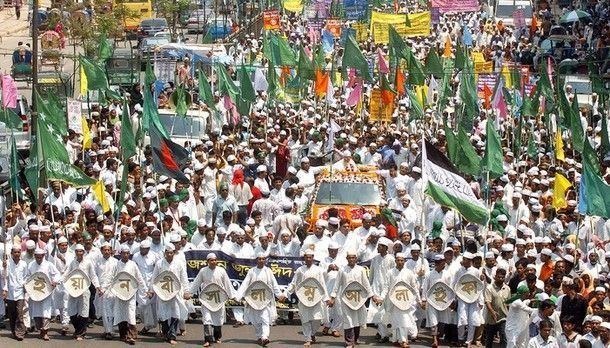
• Performative Arts: Rallies led by students feature Duff Mutt—a traditional Islamic percussion art form performed in rhythmic chorus.
• Literary Recitations: Communities recite classical Arabic panegyrics (such as al-Barzanji’s Mawlid and the Manqous Mawlid) alongside local Malayalam devotional compositions (Mawlid Pattu).
• Social Reciprocity: Celebrations include Seera conferences, academic competitions, and Mawlid Oottu—grand communal banquets and sweet distributions offered to the public, exemplifying Schimmel's observations on the link between devotional feasting and social solidarity.
Literary Poetics: The Cosmic Imagery of Light and Miracles
Schimmel’s literary analysis in Chapter 8 dissects the poetic motifs that characterize Mawlid compositions across Islamic languages.
A. The Light of Muhammad (Nur Muhammad)
Schimmel emphasizes that Mawlid poetry is grounded in the cosmological concept of primordial light. Citing early Hadith collections and the early dirge of Hassan ibn Thabit, Schimmel notes that Amina, the Prophet’s mother, experienced a radiant light at the moment of conception and birth that illuminated the distant castles of Bostra in Syria:
"Spoke the mother of that friend: 'I saw a strange light; the sun was like its moth. Suddenly it flashed up from my house, filled the world with light up to the sky...' And the King of Faith was born that night: Earth and heaven were submerged in light!"
B. Hagiographical Embellishments
Schimmel documents how folk poetry embellished the birth narrative with miraculous imagery:
• Heavenly Attendance: Pre-Islamic holy women—Asiya (the believing wife of Pharaoh) and Maryam (the Virgin Mary)—descend from heaven to act as midwives for Amina.
• Universal Welcome (Merhaba): All elements of creation—angels, birds, trees, and animals—rejoice and welcome the newborn Prophet, who was born free of bodily impurities and circumcised.
Modernist Re-evaluations: Demythologization versus Popular Affection
In the final section of Chapter 8, Schimmel analyzes the impact of 19th- and 20th-century reform movements on Mawlid practices.
Schimmel observes that modern reformers sought to shift the focus of the Mawlid from cosmic miracles to historical biography (Seerat) and ethical instruction:
• Indo-Muslim Modernism: Sir Sayyid Ahmad Khan and the poet Altaf Husain Hali (Musaddas) reinterpreted the birth legend as the historical demise of idolatry and tyranny (symbolized by the crumbling of Persian fire temples).
• State Interventions: In 1934, the Egyptian Ministry of Education attempted to purge popular Mawlid poetry of miraculous folklore in favor of rationalized historical texts.
However, Schimmel highlights the counter-critique mounted by figures like the prominent Egyptian literary scholar Taha Husain. Husain defended popular Mawlid traditions against bureaucratic purges, arguing that telling sweet stories of birds, beasts, and stars rejoicing at the Prophet’s birth did no harm to faith, but rather nourished the human heart and instilled enduring love (hubb) in the community.
Conclusion
Annemarie Schimmel’s analysis of the Mawlid in And Muhammad Is His Messenger demonstrates that the celebration of the Prophet’s birthday is far more than an annual historical commemoration. It represents a vital cultural and spiritual institution through which the Muslim world expresses its collective devotion to Muhammad as the "beautiful model" and "mercy for the worlds". Through her systematic examination of historical development, legal discourse, regional poetry, and modern reform, Schimmel provides an indispensable framework for understanding Islamic piety as a lived, artistic, and emotionally rich human experience.