ISSN : 2582-4163
Sunday , 20 September 2026
KTM College



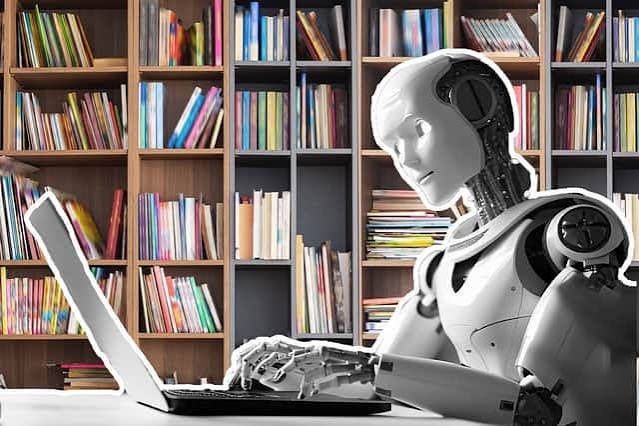
Artificial Intelligence (AI) is a branch of computer science focused on creating systems and technologies capable of performing tasks that traditionally require human intelligence. These tasks include reasoning, problem-solving, learning, understanding language, recognizing patterns, and making decisions. AI aims to simulate cognitive functions, enabling machines to process information, adapt to new inputs, and operate autonomously in various contexts. The rapid advancement of AI technologies is profoundly reshaping numerous domains, including literature. As AI systems become more sophisticated, their impact extends to both the creation and critique of literary works. AI technologies such as machine learning, natural language processing (NLP), and generative models are increasingly influential in literary creation. Tools like AI-driven writing assistants and text generators support authors in their creative processes and even generate original works of fiction, poetry, and drama. These developments prompt fundamental questions about authorship, creativity, and the extent of human intervention in the literary process. In literary analysis, the integration of AI opens new frontiers, enabling scholars to transcend traditional methods of textual interpretation. AI tools, including NLP, machine learning algorithms, and sentiment analysis, introduce innovative methodologies for analysing texts with remarkable precision and speed. These technologies facilitate tasks such as identifying thematic patterns, tracing intertextual references, and uncovering stylistic features that might otherwise remain unnoticed. For instance, AI-driven tools like topic modelling and semantic analysis allow scholars to map recurring themes and motifs across literary works, uncovering new dimensions of meaning. Stylometric analysis, supported by machine learning, has proven effective in attributing authorship and detecting historical trends in literary style. Additionally, AI algorithms help dissect complex poetic and narrative structures, offering fresh perspectives on rhythm, tone, and narrative voice. Despite these advancements, the use of AI in literary analysis raises significant questions about interpretation and subjectivity. Critics argue that literature, deeply rooted in cultural and human contexts, requires interpretative processes that AI, lacking empathy and intuition, cannot fully replicate. Nevertheless, AI serves as a powerful complement to human analysis, providing data-driven insights that inspire richer interpretations. This paper advocates for a balanced integration of AI into literary studies, emphasizing the symbiotic relationship between machine efficiency and human creativity. By exploring case studies and theoretical frameworks, it highlights the transformative potential of AI in reshaping literary scholarship while respecting the nuances of humanistic inquiry. Such collaboration promises to expand the horizons of literary analysis, fostering a deeper understanding of texts through the fusion of AI and traditional methodologies.
Key Words: Artificial Intelligence (AI), Machine Learning (ML), Natural Language Processing (NLP), Generative Models, AI-driven Writing Assistants
Artificial Intelligence (AI) has become a powerful force across multiple disciplines, influencing fields as diverse as medicine, finance, education, and the arts. One of the most intriguing areas of AI’s impact is literature, a domain traditionally regarded as the product of human creativity, emotional depth, and intellectual engagement. With rapid advancements in AI-driven language models and computational analysis, literature is undergoing a significant transformation, not only in how it is created but also in how it is critiqued and analyzed.
The ability of AI to generate text that mimics human writing has led to the emergence of AI-authored fiction, poetry, and drama. Language models such as OpenAI’s GPT-3 and GPT-4 have demonstrated remarkable proficiency in composing stories, dialogues, and verses that are often indistinguishable from human writing. For instance, in 2021, researchers used GPT-3 to generate a novel that followed conventional narrative structures, raising thought-provoking questions about authorship and originality. Similarly, AI-generated poetry has been published in literary magazines, challenging conventional notions of artistic expression. These developments invite debate on whether AI can truly be considered a writer in its own right or whether it should be viewed merely as a sophisticated tool that enhances human creativity.
Beyond prose and poetry, AI has ventured into the realm of drama. In 2020, an AI model was trained on classical and contemporary plays to produce a script for a stage performance. The resulting play, AI: When a Robot Writes a Play, was performed at a European theatre festival, showcasing the potential of AI as a playwright. This experiment underscored AI’s ability to generate dialogue, dramatic tension, and thematic depth, further blurring the lines between human and machine authorship.
Rather than replacing human writers, AI is increasingly being used as a creative collaborator. Many contemporary authors employ AI-powered writing assistants such as Sudowrite and Jasper AI to refine their prose, generate plot ideas, and overcome writer’s block. The interaction between human intuition and machine-generated text opens new possibilities for storytelling.
For example, bestselling author Robin Sloan has experimented with AI-generated suggestions in his short stories, demonstrating how computational assistance can enhance a writer’s vision rather than supplant it. Additionally, AI is integral to interactive storytelling, where readers engage with dynamically evolving narratives. Text-based AI-driven adventure games like AI Dungeon allow users to shape the course of a story through their input, merging authorship with audience participation.
Hollywood has also begun experimenting with AI in screenwriting. Some production companies use AI tools to analyze scripts, predict audience reactions, and refine dialogue. AI-generated screenplays, while not yet mainstream, have been tested in short films, illustrating the growing influence of AI in cinematic storytelling.
While AI presents exciting opportunities for creative writing, it also introduces ethical dilemmas. Questions of intellectual property, originality, and the artistic merit of AI-generated works remain unresolved. If an AI produces a novel with minimal human input, who holds the copyright? Current legal frameworks do not fully address the complexities of AI authorship, leading to ongoing debates among scholars, legal experts, and policymakers. Another pressing question is whether AI-generated literature possesses the same artistic value as human-authored texts. While AI can replicate stylistic patterns and narrative structures, it lacks personal experience, emotions, and consciousness—elements that many argue are integral to great literature. This raises philosophical concerns about the nature of creativity and the extent to which AI can genuinely contribute to artistic expression.
The role of AI in literature extends beyond creation to the realm of literary critique. Traditionally, literary criticism relies on human intuition, interpretative skills, and cultural awareness to analyze themes, symbols, and stylistic elements in a text. With AI-powered tools, scholars can now approach literary analysis with an unprecedented level of precision and scale.
AI-driven text analysis tools, including IBM Watson and Google’s BERT, process vast amounts of literary data, identifying recurring motifs and detecting subtle linguistic patterns. Researchers have employed AI to analyze the works of William Shakespeare, uncovering hidden connections between his plays and revealing linguistic structures that had previously gone unnoticed. Similarly, machine learning algorithms have examined James Joyce’s Ulysses, mapping its complex narrative structure and intertextual references.
Sentiment analysis, another AI-driven technique, allows scholars to examine the emotional progression of literary works. By applying computational models to novels such as Pride and Prejudice and Moby-Dick, researchers have been able to chart the emotional arcs of characters and analyze shifts in tone and mood. This data-driven approach offers a complementary perspective to traditional literary interpretation. However, AI’s involvement in literary critique is not without limitations. Because AI models learn from pre-existing texts, they can inherit biases present in historical and contemporary literature. An AI analyzing 19th-century novels, for example, may reinforce gender stereotypes rather than challenge them. This highlights the need for human scholars to contextualize AI’s findings within broader cultural and historical frameworks.
AI has revolutionized the field of literary analysis by enabling researchers to explore stylistic evolution, authorship attribution, and comparative literature. Stylometry, the computational study of linguistic style, has been significantly enhanced by AI. Machine learning algorithms can identify an author’s unique writing style by analyzing word frequency, syntax, and sentence structure.
A well-known example of this application is the authorship analysis of The Federalist Papers, in which AI-assisted methods helped confirm that Alexander Hamilton and James Madison were the primary authors. Similarly, AI has been used to detect pseudonymous authors, as demonstrated in 2019 when computational analysis identified J.K. Rowling as the writer behind The Cuckoo’s Calling, published under the pseudonym Robert Galbraith.
Comparative literature studies have also benefited from AI-driven textual analysis. By processing thousands of texts, AI can identify thematic similarities, intertextual references, and historical trends across literary traditions. Researchers have used AI to compare Eastern and Western poetic forms, revealing cross-cultural influences and stylistic parallels that might otherwise have remained undetected.
AI has played a crucial role in the translation of literature. While human translators capture cultural nuances and linguistic subtleties, AI-driven translation tools such as Google Translate and DeepL have made significant strides in accuracy and fluency. In 2018, an AI-translated version of a Japanese novel was nominated for a literary award, illustrating the increasing sophistication of machine-assisted translation.
As AI continues to evolve, its impact on literature is likely to expand further. The development of multimodal AI, which integrates text with visual and auditory elements, promises to revolutionize storytelling by creating immersive, interactive literary experiences. Moreover, AI has the potential to contribute to the preservation of literary heritage through digital humanities projects, ensuring that rare and fragile texts remain accessible to future generations.
The integration of AI into literature marks a paradigm shift in how literary works are created, critiqued, and analyzed. Rather than diminishing human creativity, AI has the potential to complement and enhance it, offering new tools for writers, critics, and scholars alike. However, as AI becomes more embedded in the literary landscape, it is essential to maintain a balance between technological innovation and human insight, ensuring that literature remains a deeply human endeavor shaped by cultural, emotional, and intellectual depth.
Works Cited
Bamman, David, and Underwood, Ted. “Modeling the Literary Canon with Word Embeddings.” Journal of Cultural Analytics, vol. 2, no. 1, 2019, pp. 1-25.
Bender, Emily M., et al. “On the Dangers of Stochastic Parrots: Can Language Models Be Too Big?” Proceedings of the 2021 ACM Conference on Fairness, Accountability, and Transparency, 2021, pp. 610-623.
Burrows, John F. Computers and the Study of Literature. Edinburgh UP, 2004.
Hammond, Adam. Literature in the Digital Age: An Introduction. Cambridge UP, 2016.
Hope, Jonathan, and Witmore, Michael. Shakespeare by the Numbers: The Transformation of the Humanities. Stanford UP, 2019.
Jockers, Matthew L. Macroanalysis: Digital Methods and Literary History. U of Illinois P, 2013.
Manovich, Lev. The Language of New Media. MIT Press, 2001.
McGann, Jerome. Radiant Textuality: Literature after the World Wide Web. Palgrave, 2001.
Underwood, Ted. Distant Horizons: Digital Evidence and Literary Change. U of Chicago P, 2019.
Vincent, James. “OpenAI’s GPT-3: The Most Powerful Language Model Ever.” The Verge, 29 July 2020, www.theverge.com/2020/7/29/21344194/openai-gpt-3-language-model- ai-text-generation.